Chemical Free Toilet Paper: Why It Matters and the Best Options for Your Stockpile

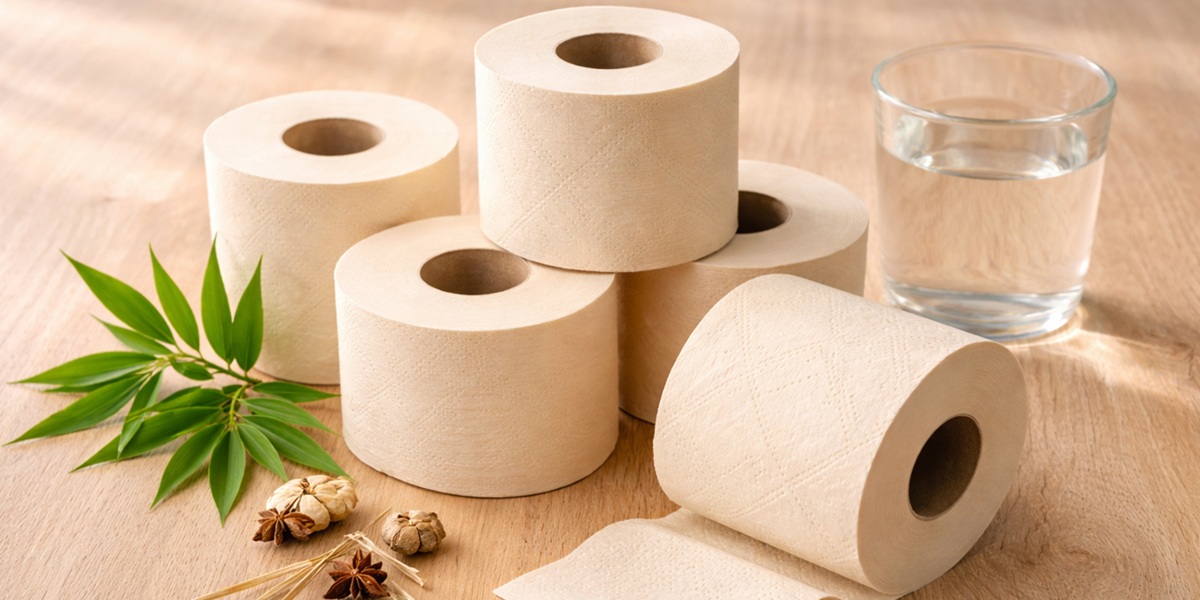

Most preppers spend a lot of time thinking about what goes into their bodies — food quality, water filtration, supplement choices. Far fewer think about what touches their skin every single day. Conventional toilet paper is one of the most chemically processed paper products in your home, and for people focused on long-term health, self-sufficiency, and reducing toxic exposure, switching to chemical free toilet paper is a logical and worthwhile step.
This article covers what chemicals are actually in conventional toilet paper, why they’re a concern, what to look for in a cleaner alternative, and how chemical free toilet paper fits into a serious preparedness stockpile.
What’s Actually in Conventional Toilet Paper?
Most commercial toilet paper goes through an aggressive industrial manufacturing process before it ever reaches your bathroom. Here’s what that process introduces:
Chlorine Bleaching and Dioxins
The majority of conventional toilet paper is made from virgin wood pulp that is bleached to achieve that bright white appearance consumers expect. Elemental chlorine bleaching produces dioxins and furans as byproducts — a family of persistent organic pollutants that are among the most toxic compounds known to science.
While many manufacturers have shifted to Elemental Chlorine Free (ECF) bleaching, which uses chlorine dioxide instead of elemental chlorine, this process still generates dioxin byproducts, just in smaller quantities. According to the Environmental Protection Agency, dioxins are known carcinogens that accumulate in body fat over time and have been linked to immune system disruption, hormonal interference, and reproductive issues.
Totally Chlorine Free (TCF) bleaching, which uses oxygen, ozone, or hydrogen peroxide instead, is the only method that produces zero dioxin byproducts.
Formaldehyde
Formaldehyde is widely used in paper manufacturing as a wet-strength agent — it’s what makes toilet paper hold together when wet rather than disintegrating immediately. The National Toxicology Program classifies formaldehyde as a known human carcinogen. While the levels present in toilet paper are low, daily repeated exposure across a lifetime is worth considering, particularly given that the perineal area has highly absorbent mucous membranes.
Fragrance and Optical Brighteners
Scented toilet paper and “fresh” varieties contain synthetic fragrance compounds, many of which are derived from petroleum and have never been individually tested for safety. The fragrance industry operates largely under trade secret protections, meaning manufacturers are not required to disclose the specific chemicals used.
Optical brighteners — chemical compounds added to make paper appear whiter and more luminous — are another common additive with documented skin sensitization potential.
BPA and Recycled Paper Concerns
Toilet paper made from recycled office paper and thermal receipt paper has been found to contain Bisphenol A (BPA) — a well-documented endocrine disruptor. A study published in Environmental Science & Technology found measurable BPA levels in recycled paper products including toilet paper. While recycled content is environmentally appealing, the source material matters significantly.
Pesticide Residues
Conventional cotton-based toilet paper and some wood pulp products may carry residues from pesticides and herbicides used during crop production. Glyphosate in particular has been detected in a range of cotton hygiene products.
What Makes Toilet Paper “Chemical Free”?
True chemical free toilet paper minimizes or eliminates the following:
- Chlorine bleaching — uses TCF (Totally Chlorine Free) processing instead
- Formaldehyde and wet-strength resins — relies on fiber quality rather than chemical binders
- Synthetic fragrances and dyes — completely unscented and uncolored
- Optical brighteners — accepts a natural off-white or cream color
- BPA and recycled thermal paper — uses virgin bamboo, sugarcane, or certified FSC wood pulp
- Pesticide-heavy crops — uses organically grown or sustainably harvested raw materials
The most common raw materials in genuinely clean toilet paper are bamboo, sugarcane bagasse, and FSC-certified wood pulp from responsibly managed forests.
Bamboo Toilet Paper: The Prepper’s Best Option
Bamboo has become the dominant material in the chemical free toilet paper market, and for good reason. From a preparedness standpoint, bamboo offers several compelling advantages beyond just chemical cleanliness.
Bamboo is technically a grass, not a tree. It grows to harvest maturity in three to five years compared to the 30 to 100 years required for softwood trees commonly used in conventional paper. It requires no replanting after harvest — bamboo regenerates from its own root system — and it generally requires no pesticides or herbicides due to its natural antimicrobial properties.
From a supply chain perspective, bamboo toilet paper is produced by a growing number of manufacturers, meaning it’s increasingly available through major retailers and in bulk quantities suitable for prepper stockpiling.
Top Chemical Free Toilet Paper Options
Who Gives A Crap (Bamboo)
One of the most well-known names in the clean toilet paper space. Their bamboo toilet paper is 100% free of inks, dyes, fragrances, and BPA. It uses no chlorine bleaching and ships in plastic-free paper wrapping. Available in bulk rolls of 48, which is well-suited to prepper stockpiling. The company donates 50% of profits to sanitation-focused nonprofits. A solid all-around choice for both health-conscious households and serious long-term storage.
Reel Paper (Bamboo)
Reel uses 100% bamboo, is FSC-certified, free of BPA, fragrances, dyes, and chlorine bleaching. Ships plastic-free. Strong reviews for softness and durability. Available via subscription which simplifies ongoing stockpile maintenance.
Caboo Tree-Free (Bamboo and Sugarcane)
Caboo combines bamboo with sugarcane bagasse — the fibrous byproduct left after sugarcane juice extraction. This blend produces a soft, strong paper that is genuinely tree-free and completely free of chlorine bleaching, fragrances, dyes, and BPA. Widely available in major retail stores including Target and Walmart, which matters for preppers who want a reliable local supply.
Seedling by Grove Collaborative
Uses FSC-certified bamboo with TCF processing. Free of fragrances, dyes, and BPA. Available in bulk packs. Grove Collaborative is a certified B Corporation with transparent ingredient disclosure practices.
Cloud Paper (Bamboo)
Cloud Paper uses 100% organic bamboo with TCF bleaching, no fragrances, dyes, BPA, or formaldehyde. One of the few brands that explicitly addresses formaldehyde on its product labeling. Good option for households with particularly sensitive skin or chemical sensitivities.
What to Look for on the Label
When evaluating any toilet paper marketed as natural or chemical free, here are the specific claims and certifications to look for:
- TCF (Totally Chlorine Free) — The gold standard for bleaching. Means zero chlorine compounds were used in processing.
- ECF (Elemental Chlorine Free) — A step up from conventional but not truly chlorine-free. Still produces some dioxin byproducts.
- FSC Certified — Forest Stewardship Council certification ensures wood or bamboo was harvested from responsibly managed sources.
- Fragrance-Free — Not the same as “unscented.” Unscented products can still contain masking fragrances. Fragrance-free means no fragrance compounds at all.
- BPA-Free — Particularly important if the product contains any recycled content.
- USDA Certified Organic — Relevant for bamboo or cotton-based products; ensures no synthetic pesticides or herbicides were used in cultivation.
Avoid products that use vague marketing language like “natural,” “gentle,” or “pure” without backing certifications. These terms have no regulatory definition in the paper products industry.
Chemical Free Toilet Paper for Your Prepper Stockpile
From a preparedness standpoint, toilet paper is one of the most commonly cited items in discussions about supply chain vulnerabilities — for good reason. The 2020 toilet paper shortage demonstrated just how quickly retail supplies can evaporate during a crisis event, and how deeply uncomfortable daily life becomes without reliable access to basic sanitation supplies.
How Much to Store
FEMA recommends a minimum two-week emergency supply for basic household goods. Most serious preppers aim for a three to six month supply at minimum, with one year being a reasonable long-term target for households committed to genuine self-sufficiency.
A typical American household uses roughly 100 rolls of toilet paper per person per year. For a family of four, that means 400 rolls for a one-year supply. Most bulk bamboo toilet paper options ship in cases of 24 to 48 rolls, so four to eight cases covers a family of four for three months.
Storage Considerations
Toilet paper stores exceptionally well when kept properly. Key storage conditions:
- Keep it dry — Moisture is the only real enemy of stored toilet paper. A single leak can destroy an entire case. Store in plastic bins or sealed containers, or keep original sealed packaging inside waterproof totes.
- Avoid temperature extremes — Heat and cold cycling can degrade paper fibers over time. A climate-controlled space is ideal, but a cool, stable basement or interior closet works fine.
- Protect from pests — Rodents consider paper products prime nesting material. Keep stored toilet paper off the floor and in sealed hard containers if your storage space has any pest pressure.
- Rotate your stock — Use oldest supplies first and replenish regularly. While toilet paper doesn’t expire in a traditional sense, paper fibers do degrade over many years, and bamboo products maintain their quality best when used within three to five years of manufacture.
Beyond Toilet Paper: Chemical Free Alternatives Worth Knowing
For a truly resilient preparedness plan, it’s worth knowing your options if conventional supply chains fail entirely:
- Bidet attachments — A simple cold-water bidet attachment costs $25 to $50 and dramatically reduces toilet paper consumption — some households reduce usage by 75% or more. In a long-term grid-down scenario with running water, a bidet represents a significant sanitation advantage.
- Family cloth — Reusable cloth wipes made from flannel or cotton are a zero-waste, zero-supply-chain option practiced in many self-sufficient households. Stored in a wet bag and laundered regularly, they eliminate dependence on purchased toilet paper entirely.
- Natural materials — In a true long-term emergency, large smooth leaves, moss, and water are what humans used for most of history. Knowing which local plants are safe and effective is a legitimate preparedness skill.
Making Your Own Toilet Paper
This is also a possibility you can take into account. We have a video showing you how to do this:
The Health Case in Summary
The cumulative toxic load argument is straightforward: no single exposure to the chemicals in conventional toilet paper is likely to cause measurable harm. The concern is lifetime daily exposure to a product applied to one of the most absorbent and sensitive areas of the body. For preppers already committed to clean water, organic food, and reduced chemical exposure across their household, switching to chemical free toilet paper is a logical extension of that same philosophy — and in bulk bamboo form, it actually fits neatly into a well-organized preparedness stockpile.
The chemicals aren’t worth it. The alternatives are widely available, competitively priced, and in many cases softer and more pleasant than what they replace. It’s one of the easier upgrades you can make.
Real Self-Reliance Starts With Everyday Systems
Most people think preparedness is about dramatic scenarios.
Power outages. Economic collapse. Natural disasters.
But the truth is far less glamorous — and far more important.
Preparedness is built in the quiet, boring, everyday decisions that determine how dependent your life really is on fragile modern systems.
Toilet paper. Hygiene. Water. Food. Waste.
The Amish understood something we’ve largely forgotten: resilience isn’t created during a crisis — it’s designed into daily life long before anything goes wrong.
That’s exactly what The Amish Ways Book teaches.
Inside, you’ll discover:
✔ Low-tech sanitation solutions that work without supply chains
✔ Practical household systems designed for independence
✔ Time-tested methods for reducing daily consumption
✔ The mindset that turns “normal living” into long-term resilience
Because when store shelves empty, it’s not the tacticool gear that saves you.
It’s the boring essentials you planned for.
👉 Grab your copy of The Amish Ways Book here!
Modern convenience is comfortable.
Self-reliance is security.
And the difference only becomes obvious when systems fail.
You may also like:
 Toilet Paper Pills – The Best Invention You Didn’t Know Existed
When Grocery Stores Go Empty – A Back Door Shopping Strategy (Video)
Making Your Own Toilet Paper
Grow Your Own Toilet Paper
Homemade Substitutes for Toilet Paper
Read the full article here