
Across the United States, farmland has always meant independence. It represents food on the table, control over your own future, and a way of life that built this country. For generations, American farmers worked the soil, raised livestock, and passed their land down to their children. That land fed the nation and strengthened rural communities.
In recent years, however, quiet changes have taken place. Foreign buyers, including individuals and companies tied to China, have purchased farmland across several states. Much of this buying happened with little public attention.
So, why are foreign interests buying American farmland, and what does it mean for the future?
The Little We Know About the Chinese-Owned US Farmland
 Foreign ownership of American farmland is legal under federal law, although buyers must report their purchases. According to public records from the U.S. Department of Agriculture, foreign investors own millions of acres of American agricultural land.
Chinese-linked ownership represents a small percentage compared to some other countries, yet the concern remains strong because of the strategic implications.
Chinese investors have purchased farmland in states such as Texas, North Carolina, Missouri, and Arkansas. In some cases, these purchases involved large agricultural operations. In others, companies tied to Chinese nationals bought land near military installations, which raised serious national security questions.
Several governors and state legislatures have responded by passing or proposing laws to restrict foreign ownership of farmland. The debate continues, and the conversation has expanded beyond politics into the homes of farmers and rural families who see this as a long-term issue affecting their livelihoods.
Why Farmland Matters to National Security
Food security is national security. A country that cannot feed itself becomes vulnerable during times of crisis. Americans learned this lesson during supply chain disruptions, rising grocery prices, and shortages that appeared almost overnight.
Farmland is the foundation of the food supply. Whoever controls farmland influences production, distribution, and long-term availability. When foreign entities acquire agricultural land, questions naturally follow. Will the crops grown on that land stay in the United States? Will they be exported? How will this affect local communities?
Deadly Bug-In Mistakes You’re Probably Making Right Now
There is also the issue of proximity to military bases and critical infrastructure. Some Chinese-linked land purchases occurred near sensitive sites, which led to investigations and, in certain cases, blocked projects. Lawmakers from both parties have expressed concern that land ownership could create opportunities for surveillance or influence.
Farmland or Foothold?
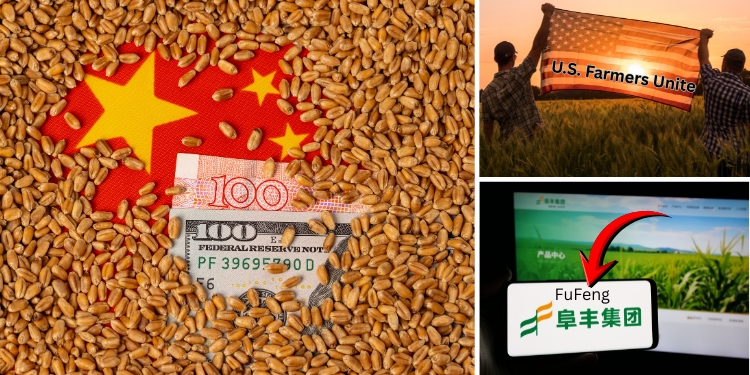
One of the biggest flashpoints in this debate involves Chinese-linked agricultural projects located near U.S. military facilities. In 2022, a Chinese-owned company, Fufeng Group, purchased land in Grand Forks, North Dakota, with plans to build a large corn milling plant.
The site was located just miles from Grand Forks Air Force Base, home to sensitive drone and satellite operations. What began as a local development project quickly escalated into a national security concern.
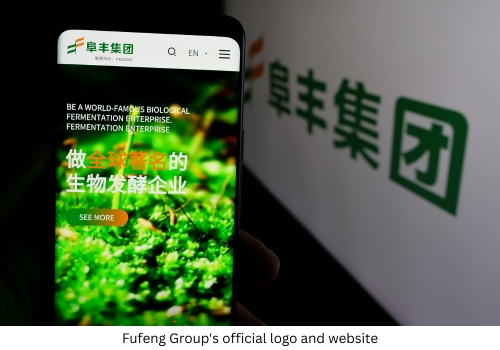 Air Force officials later stated the location posed a “significant threat” due to the base’s mission and capabilities. The project was ultimately halted after federal review and intense public scrutiny. Similar concerns have surfaced in other states where foreign-linked farmland purchases occurred near military installations or critical infrastructure.
Lawmakers from both parties have questioned whether proximity to strategic sites could enable surveillance, data collection, or influence over local infrastructure. Even when no wrongdoing is proven, the mere possibility shifts the conversation.
The Impact on American Farmers
Family farmers already face rising costs for fuel, fertilizer, equipment, and labor. Land prices have climbed sharply in many regions, making it harder for young farmers to enter the field or expand their operations. When foreign buyers enter the market with deep pockets, competition increases and prices can rise even further.
Edible Plant Maps For Every U.S. State
Local farmers often struggle to compete with large investment groups that view farmland as a long-term asset. When land shifts from family ownership to corporate or foreign control, rural communities can change. Profits may flow out of the region instead of staying local. Decisions may be made in boardrooms far removed from the soil itself.
The fact is, this shift affects more than economics. It touches culture and identity. Farming in America has always carried a strong sense of stewardship. Families care for the land because they expect to pass it on. Outside investors may approach land from a different angle, focusing on yield and return without long-term ties to the community.
The Role of Chinese Agribusiness Companies
 Several Chinese-linked companies have invested in American agriculture over the past decade. Some of these firms operate legally under U.S. law, employing American workers and contributing to local economies.
At the same time, concerns remain about ties between major Chinese corporations and the Chinese Communist Party.
It’s a well-known fact that China’s government has made food security a national priority. The country imports large amounts of soybeans, corn, and other agricultural products to feed its population and livestock.
Xi Jinping knows very well that an investment in foreign farmland can provide stable supply chains and influence over production.
Many of us preppers look at these land deals with caution. China’s government talks openly about protecting its food supply for the long term. When companies linked to that system buy farmland or food plants in the U.S., people who care about self-reliance start asking questions:
- Who really owns the land?
- Where will the crops go?
- What is the long-term goal behind these purchases?
State-Level Pushback and New Laws
The good part is that, over the past few years, several states have taken action. Texas passed legislation restricting land purchases by entities tied to certain foreign governments. Florida approved measures limiting foreign ownership near critical infrastructure. Other states have introduced similar bills.
The Common Backyard Plant that Could Bring You an Extra Income
These efforts reflect growing concern among voters who want stronger safeguards. Governors and lawmakers argue that protecting farmland from strategic foreign control is a matter of common sense. They see it as part of a larger effort to protect supply chains, energy resources, and infrastructure.
The federal government has also reviewed certain transactions through national security committees. In one high-profile case, a proposed corn milling plant in North Dakota faced heavy scrutiny because of its location near a military base. Local opposition played a major role in bringing attention to the issue.
Food Independence in an Uncertain World
 When COVID spread in 2020, major meat processing plants shut down after outbreaks among workers, and that single disruption rippled through the entire food system.
Ranchers had cattle ready for market but nowhere to send them, grocery stores struggled to keep beef and pork in stock, and prices began to climb in a way most Americans had never seen before.
At the same time, Washington poured trillions of dollars into the economy through stimulus packages and emergency spending. The money supply expanded rapidly, and inflation followed.
The dollar lost purchasing power, which meant families needed more cash to buy the same groceries. By 2022 and 2023, food prices had risen sharply. Eggs doubled in price during the worst of the supply strain. Beef, chicken, dairy, and grain products all moved higher. Retirees on fixed incomes felt squeezed, and working families saw their weekly grocery bills jump by hundreds of dollars over the course of a year.
As if this weren’t enough, global events added more pressure. The war in Ukraine disrupted wheat and fertilizer exports, since both Russia and Ukraine supply a large share of the world’s grain and farm inputs. Fertilizer prices surged, which drove up costs for American farmers planting corn and soybeans. Higher fuel prices made it more expensive to run tractors, transport goods, and operate equipment. Each link in the chain became more expensive, and those costs always move downstream to the consumer.
Many people responded by expanding their gardens, raising chickens, building underground fridges or strengthening their relationships with local farmers. They wanted more control over what feeds their households.
When foreign interests, especially those linked to China, purchase American farmland, it adds another layer of concern to an already stressed system. Even if the acreage percentage remains relatively small, the long-term direction matters.
People who watched shelves thin out and prices surge are paying closer attention to who owns productive land. They want to know what will be grown there, where the harvest will go, and whether American soil will always serve American families first.
Transparency and Reporting Gaps
 Although foreign buyers are supposed to report farmland purchases through the federal Agricultural Foreign Investment Disclosure Act, the system has clear weaknesses.
Reports are often filed months after a deal is completed, which means local communities may not even know land has changed hands until long after the paperwork is done.
In recent years, lawmakers have pointed out that the USDA does not always have the staff or tools to verify every transaction quickly, and penalties for late reporting have rarely been strong enough to discourage abuse.
Some of the most controversial cases have shown how gaps in oversight can matter. In North Dakota, for example, a Chinese-linked company attempted to build a large corn processing plant near Grand Forks, close to a major Air Force base.
The project raised alarms only after local leaders and national security officials began digging into the details. Situations like this have made many Americans question how often foreign involvement goes unnoticed until it reaches a breaking point.
The problem becomes even harder when ownership is hidden behind layers of corporate paperwork. Large investors can buy land through U.S.-based subsidiaries, investment funds, or shell companies that do not openly advertise foreign ties.
A farm may appear American on paper while the controlling interest sits overseas. In rural areas, where land is tied to food production and local independence, people want clear answers about who truly owns the ground, what their long-term intentions are, and whether American farmland is being quietly treated as a strategic asset instead of a national resource.
The Pressure on American Farmers
In 2026, American farmers are facing intense financial strain. Input costs for fuel, fertilizer, and equipment remain high while commodity prices stay low, squeezing margins across the country. Retail food prices rose 4.5% in the 12 months ending December 2025, yet many producers say they are not seeing those gains at the farm level.
The Only Legal Way to Stop Paying Your Taxes
In response, the USDA announced $12 billion in bridge payments for 2025 crop producers, along with new support programs for specialty crops affected by market disruptions. Groups like the National Farmers Union are pushing for stronger protections for family farmers, warning that without structural reforms, more operations could disappear. The moment has even drawn comparisons to the 1979 tractorcade protests in Washington, D.C., when farmers drove their equipment to the capital demanding fair prices.
The Broader Geopolitical Context
Relations between the United States and China have grown steadily more tense over the past decade. Trade disputes, technology restrictions, military positioning in the Pacific, and economic competition have reshaped how Americans view routine business dealings.
In this climate, farmland purchases and agricultural investments carry deeper meaning because they sit at the intersection of food, trade, and national power. China operates under a system where major corporations often align closely with government priorities.
Food security remains a central focus for Beijing, especially as its population depends heavily on imported grain and feed. When companies with ties to that system acquire farmland, processing facilities, or agricultural infrastructure in the United States, many Americans view those moves through a strategic lens rather than a purely commercial one.
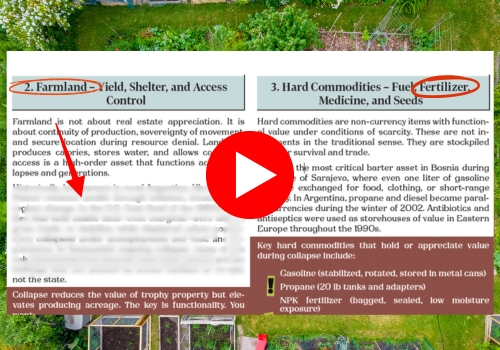
As David Bates noted in Dollar Apocalypse, modern conflict is increasingly economic, with nations using trade policy and supply pressure instead of direct confrontation. The tariff shock of early 2025 showed how quickly U.S.-China tensions can disrupt global commerce, raising the stakes over resources like grain, farmland, and food production. In that kind of environment, agricultural land becomes leverage.
Find out more in the video below:
What This Means for American Families
For many families, this issue can seem far away until it shows up in the grocery bill. Higher food prices, empty shelves during shortages, and worries about how stable the system really is make it personal very quickly. What once felt like politics becomes a household concern.
What Happens When China Stops Supplying the United States?
Owning a few acres, planting a garden, or buying meat and produce from nearby farmers gives people a stronger sense of control. In recent years, more families have returned to these habits. Farmers’ markets are busier, local food co-ops are growing, and backyard chickens are common in places where they were rare a decade ago.
These choices keep more food production close to home and reduce reliance on long supply chains. They also strengthen a mindset of independence that many families see as necessary when times become uncertain.
Looking Ahead
The debate over Chinese ownership of U.S. farmland will likely continue. Lawmakers will propose new restrictions, courts may review existing laws, and public awareness will expand. The conversation reaches beyond politics and touches on identity, security, and the future of rural America.
So if you’ve been wondering who will control the food supply five years from now, there’s a more important question: who will control yours? The prepared families aren’t arguing online about farmland deals. They’re quietly building something far more powerful at home – a private, automated food source that keeps producing no matter what happens in Washington, Beijing, or on Wall Street.
Watch this short presentation and discover the simple backyard system thousands of families are already using to secure fresh, protein-rich food on demand:
 In the end, what matters most is this: land has always been central to American freedom. It provides food, work, and stability. As foreign investment increases and global tensions evolve, Americans are paying closer attention to who owns the soil beneath their feet.
You may also like:
 WARNING: Top 1% Farmer Voices His Concerns About The Coming Food Crisis
The Only Reliable Way to Secure Water When the Next Megadrought Hits (VIDEO)
What Happens If China Becomes The Ruling Economic Power Of The World
12 Amish Farming Secrets Every Prepper Should Know
Where to Hide Your Supplies During Martial Law
Read the full article here