
When most people think about honey, they think about sweetness, long shelf life, or natural medicine. But here’s a question that doesn’t come up nearly enough in survival circles: is honey flammable?
The answer might surprise you — and it could change the way you think about this golden substance as a survival resource. Whether you’re building a bug-out bag, stocking a long-term pantry, or learning to live off the land, understanding honey’s properties from every angle is exactly the kind of edge that separates a prepared survivor from someone who gets caught off guard.
The Short Answer: Not Easily, But Yes
Honey is not flammable in its raw, liquid form under normal conditions. You won’t accidentally set a jar of honey on fire with a spark or an open flame nearby. However, honey can burn — it just needs specific conditions to do so.
Honey is primarily composed of sugars (fructose and glucose), water, and trace minerals. The water content in raw honey typically sits between 17% and 20%, and that moisture is what prevents it from igniting easily. For a substance to be considered flammable, it generally needs a flash point below 100°F (37.8°C). Honey’s flash point is significantly higher than that.
That said, when honey is heated to high temperatures — around 300°F (149°C) or more — the sugars begin to caramelize and eventually combust. At that point, yes, honey can catch fire. Crystallized or dehydrated honey, which has a much lower moisture content, is also more susceptible to burning.
Why This Matters for Preppers
Understanding the flammability (or lack thereof) of honey isn’t just chemistry trivia. It has real, practical implications for how you store, use, and leverage honey in a survival scenario.
1. Safe Storage Near Heat Sources
Many preppers store supplies in garages, sheds, or vehicles — places that can get extremely hot in summer months. Knowing that honey won’t spontaneously combust near a heat source gives you peace of mind. A jar of honey sitting near your camp stove or in a hot car isn’t a fire hazard.
However, prolonged exposure to high heat will degrade honey’s quality. Temperatures above 104°F (40°C) begin to break down its natural enzymes and antimicrobial properties — the very things that make it so valuable in a survival context. Store it cool and dark whenever possible.
2. Honey as a Fire Starter? Not Quite
You may have come across claims online suggesting honey can be used as a fire starter or fuel. Let’s be direct: raw honey is a poor fire starter. Its high moisture content and sticky consistency make it difficult to ignite, and it won’t sustain a flame the way tinder, fatwood, or animal fat will.
Crystallized honey is a different story. When honey loses its moisture through crystallization or dehydration, the sugar content becomes more concentrated and more combustible. While it’s still not your first choice for fire-starting, in a true last-resort scenario with no other options, dry crystallized honey could theoretically help sustain a small flame when combined with dry tinder.
Don’t count on it. But file it away.
3. Cooking With Honey Over an Open Fire
Here’s where preppers need to pay attention. Honey is a fantastic survival food and natural sweetener, but cooking with it over an open flame requires caution.
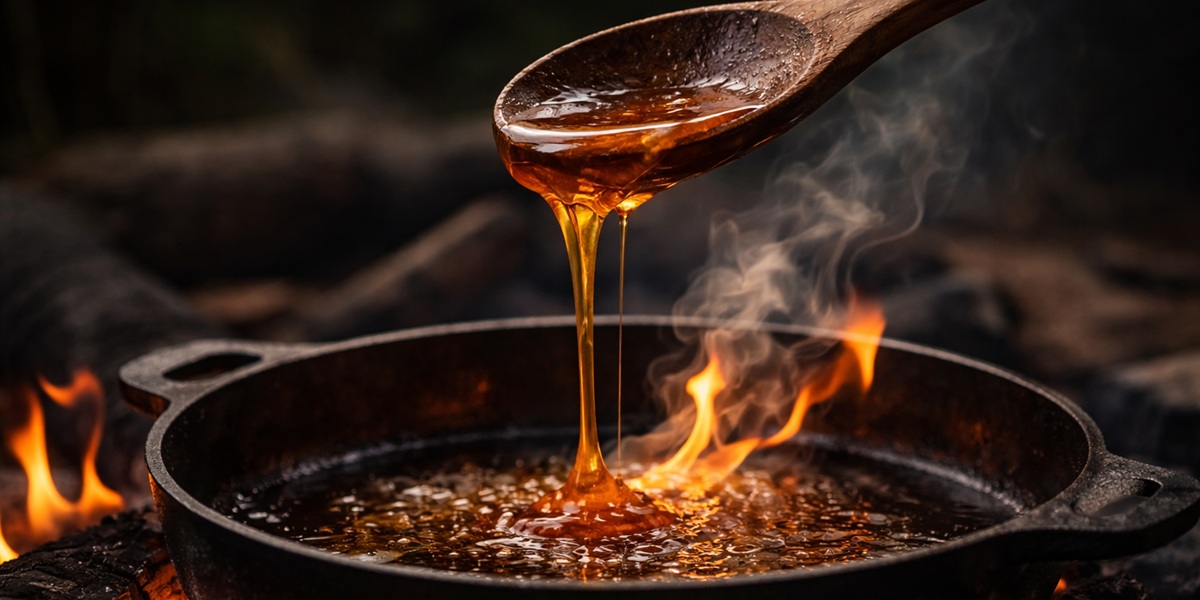
When you add honey to a pan or pot over high heat, the sugars can scorch quickly, producing thick smoke and potentially catching fire if the temperature gets out of control. If you’re cooking over a wood fire — which is harder to regulate than a gas stove — keep the heat moderate and stir frequently. Never leave honey unattended over an open flame.
Honey-glazed foods, in particular, are prone to flare-ups because the sugars caramelize and then burn rapidly at the edges. This is true whether you’re cooking a rabbit over a spit or boiling roots in a clay pot with a touch of honey for calories and flavor.
The Survival Value of Honey Goes Way Beyond Taste
Now that we’ve settled the flammability question, let’s make sure you’re fully appreciating why honey deserves a permanent spot in your survival strategy.
Indefinite Shelf Life
Archaeologists have found honey in Egyptian tombs that was still edible after 3,000 years. Properly sealed honey — with low moisture content — will outlast virtually every other food in your stockpile. It doesn’t expire. It may crystallize, but crystallized honey is still perfectly good and can be reliquified by gently warming the jar.
This makes it one of the single best long-term caloric stores a prepper can have.
Natural Wound Care
Honey — particularly raw, unprocessed honey — has well-documented antimicrobial properties thanks to its low pH, hydrogen peroxide content, and high sugar concentration. In a grid-down scenario where antibiotics aren’t available, honey applied to wounds, cuts, and burns can help prevent infection and promote healing.
Medical-grade Manuka honey is specifically used in clinical settings for wound treatment, but any raw honey will provide some degree of antimicrobial benefit in a pinch.
Energy-Dense Survival Food
Honey is roughly 300 calories per 100 grams — almost entirely from fast-burning sugars. In a survival situation where you’re expending massive amounts of energy and may not have access to balanced meals, honey offers a rapid energy source that’s easy to carry and requires no preparation.
A small squeeze bottle of honey weighs almost nothing in a bug-out bag and provides a powerful caloric punch when you need it most.
Natural Cough and Illness Remedy
When SHTF, getting sick can be life-threatening. Honey has been used for centuries as a natural remedy for sore throats, coughs, and respiratory infections. Mixed with hot water and ginger or lemon (if available), it can provide meaningful relief when conventional medicine isn’t an option.
How to Store Honey for Long-Term Survival
To get the most out of honey as a survival resource, proper storage is essential:
- Use glass jars whenever possible. Plastic can leach chemicals over time, especially when honey is warm.
- Keep it sealed tightly. Honey is hygroscopic — it absorbs moisture from the air. If the moisture content rises above 19%, fermentation can occur.
- Store in a cool, dark location. Avoid temperature extremes. A root cellar, basement, or interior pantry shelf is ideal.
- Don’t refrigerate. Cold temperatures accelerate crystallization. While crystallized honey is still safe, it’s harder to use. Room temperature storage is best.
- Buy raw and unfiltered. Processed honey has had many of its beneficial enzymes and antimicrobial compounds removed. Raw honey is the superior survival choice.
Trusted Sources & Further Reading
Final Thoughts
Is honey flammable? In its raw liquid form, no — not under normal conditions. But push it to high enough temperatures, or let it dry out completely, and those sugars will burn.
More importantly for preppers: honey is one of the most versatile, shelf-stable, and genuinely useful survival substances you can stockpile. Understanding its properties — including its behavior around fire — helps you use it smarter, store it safer, and rely on it more confidently when the grid goes down.
Stock it deep, store it right, and never underestimate what a jar of honey can do when it matters most.
While most of us chase gadgets, gear upgrades, and the latest “tactical must-have,” the Amish have spent centuries refining something far more valuable: practical, low-tech survival wisdom that actually works in the real world.
No electricity? Normal day.
Supply chain disruptions? Already adapted.
Economic instability? Built around resilience.
If you found this deep dive on honey useful, imagine what you’ll gain by learning from a culture that has mastered self-reliance without modern conveniences.
The Amish Ways Book isn’t theory, hype, or survival fantasy. It’s a collection of time-tested strategies covering:
- Food preservation & long-term storage
- Natural remedies & everyday medicine
- Low-tech solutions for daily living
- Frugality, durability, and resourcefulness
- Skills that remain valuable when systems fail
These are not “SHTF tricks.”
These are life skills designed for uncertainty.
Because preparedness isn’t just about surviving disasters.
It’s about building a lifestyle that is harder to break.
If you’re serious about resilience, self-sufficiency, and reducing dependence on fragile modern systems, this is one of the smartest additions you can make to your survival library.
👉 Discover the principles that have kept communities stable for generations:
Grab your copy of The Amish Ways Book here
Your gear might fail.
Your power might go out.
But knowledge like this?
That stays with you. 💪
You may also like:
 Manuka Honey For Wound Care
The 10 Medicinal Plants You Need to Have in Your Backyard When SHTF (Video)
How To Preserve Foods In Honey
The Antibiotic Honey That Shouldn’t Be Missing From Your Stockpile
How To Make Dandelion Honey Butter
Read the full article here