
When the power goes out, fire instantly becomes one of the most important survival tools you can have. It provides warmth, allows you to cook food, purify water, dry clothing, and maintain morale when conditions turn bad. That’s why fire-making has always been one of the first skills taught in survival.
A ferro rod is one of the most reliable ways to create fire when modern systems fail. Unlike lighters or matches, it doesn’t rely on fuel, doesn’t stop working when wet, and can last for thousands of strikes. But owning one isn’t enough. Knowing how to use it properly is what actually matters.
What a Ferro Rod Really Does
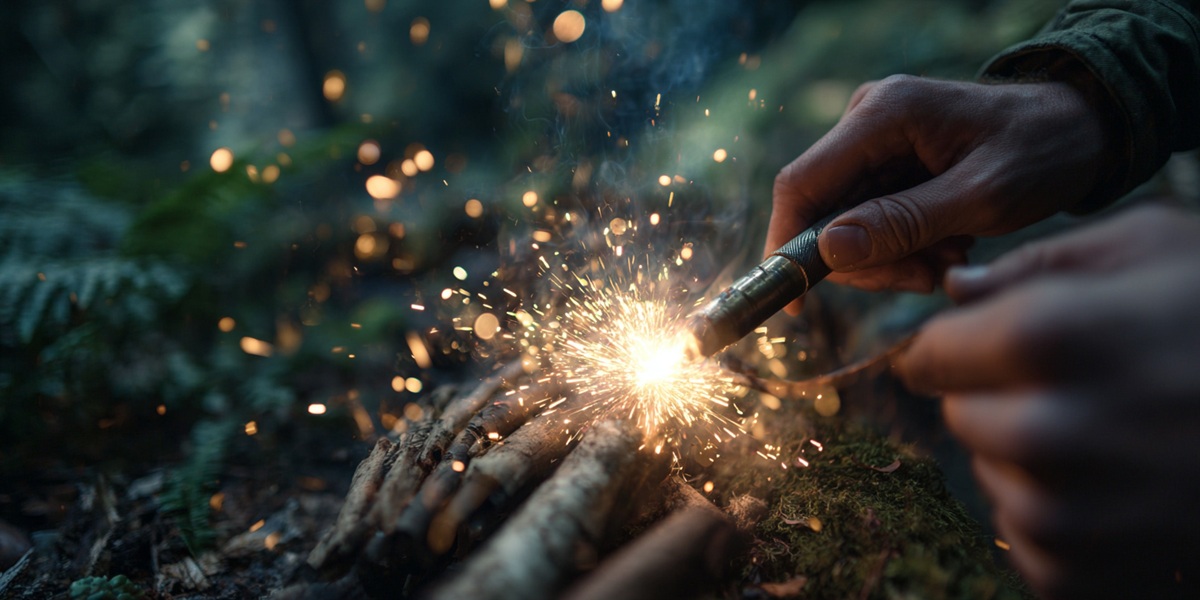
A ferro rod is made from a man-made alloy called ferrocerium. When scraped, tiny metal shavings are shaved off the rod. Those shavings ignite instantly when exposed to oxygen, producing extremely hot sparks.
This is an important detail many people misunderstand. The rod itself isn’t “sparking.” What you’re creating is burning metal dust. That’s why pressure and technique are far more important than speed or strength.
Once you understand this, using a ferro rod becomes much more consistent.
Preparing Before You Strike
Most failed fire attempts happen before the ferro rod is even touched. Fire is built in stages, and skipping preparation almost guarantees frustration.
Before striking, you should already have:
- Dry tinder prepared and fluffed
- Kindling staged nearby
- Larger fuel ready within reach
Your tinder must be extremely fine. Think shredded, fuzzy, or fibrous. The more surface area it has, the easier it will ignite from a single spark.
Good natural and carried tinder options include dry grass, birch bark scrapings, fatwood shavings, cotton with petroleum jelly, or char cloth.
Proper Hand Position and Setup
One of the biggest beginner mistakes is holding the ferro rod in the air and scraping downward. This scatters sparks everywhere and often destroys the tinder pile.
A better method is to place the tip of the ferro rod directly into the tinder. Pin it firmly to the ground or against a solid surface so it doesn’t move.
Keeping the rod stable gives you control and keeps sparks concentrated exactly where you want them.
Fire-making works best when everything stays calm and deliberate.
The Correct Striking Technique
When striking the ferro rod, your goal is to shave metal, not scrape quickly.
Hold your striker or the spine of your knife at a 90-degree angle against the rod. Lock your striker hand in place and pull the rod backward toward you in a smooth, controlled motion.
This method keeps sparks focused and prevents you from knocking your tinder apart. Short, firm strokes work better than long, aggressive ones.
Controlled movement beats force every time.
Using a Knife vs a Striker
Both can work, but not all knives are suitable.
If you’re using a knife, the spine must be sharp and squared. Rounded or coated spines won’t shave enough material to create strong sparks.
Dedicated ferro rod strikers are often more reliable because they’re designed specifically for this task. They remove material efficiently and reduce wear on your knife.
In survival situations, the best tool is the one that works consistently, not the one that looks impressive.
Starting a Fire in Wet or Cold Conditions
Ferro rods perform extremely well in rain, snow, and freezing temperatures. The challenge is not the spark — it’s the tinder.
When everything is wet, you may need to process materials first. Split branches to access the dry inner wood, shave feather sticks, or use resin-rich fatwood if available.
Carrying a small amount of waterproof emergency tinder can make the difference between success and hypothermia. Fire in bad conditions is less about speed and more about preparation.
Common Mistakes to Avoid
Many people struggle with ferro rods because of a few repeated errors:
- Rushing instead of preparing properly
- Using weak or inconsistent pressure
- Holding the rod in midair
- Failing to protect tinder from moisture
- Practicing only in perfect conditions
Fire-making is a skill that improves through repetition. The more varied your practice conditions, the more reliable you become.
Why Practice Matters
A ferro rod is not difficult to use, but it is not instinctive either. Under stress, cold, or exhaustion, fine motor skills decrease rapidly.
Practicing in calm conditions builds muscle memory that carries over when situations become uncomfortable. That familiarity can turn a frustrating moment into a successful fire in seconds.
Like all survival skills, confidence comes from repetition.
Final Thoughts
Fire has always separated those who endure from those who struggle. A ferro rod gives you the ability to create that fire almost anywhere, in nearly any weather, without relying on modern systems.
But tools don’t replace knowledge. They support it.
Learning how to use a ferro rod properly is a small skill that delivers massive returns when everything else stops working.
Want to Go Deeper?
If you’re serious about building real outdoor and survival skills, learning from structured training can make a major difference. Programs like the Wilderness Survival Academy focus on practical, field-tested techniques that go far beyond basic fire-starting.
They teach skills like shelter building, navigation, water procurement, and decision-making under pressure — the kind of knowledge that actually matters when plans fall apart.
You can learn more here!
Because preparedness isn’t about fear — it’s about competence.
You may also like:
 DIY Waterproof Fire Starter
The DIY Power Plant that Will Last for Two Decades (VIDEO)
Starting a Fire with Potassium Permanganate
The Only Survival Fires You Should Know
How To Dig A Native American Dakota Fire Hole
Read the full article here