Podcast: USFWS Director Brian Nesvik on the Future of Refuges and Wildlife Conservation


Brian Nesvik describes himself as a “problem solver.” It’s a personality characteristic that propelled his career, from a field warden to head game warden and ultimately to the leader of the Wyoming Game and Fish Department, allowed him to concurrently rise to rank of brigadier general with the Wyoming National Guard, and made him a consensus pick by the Trump administration to lead the U.S. Fish and Wildlife Service.
In his current role, there are plenty of problems to solve. From implementing congressional direction to revise the controversial Endangered Species Act to managing national wildlife refuges in changing landscapes to combating invasive species with new tools, Nesvik’s task is immense. Add the Trump administration’s aggressive pursuit of energy and mineral extraction on federal lands and its disregard for collaborative conservation, and Nesvik’s ability to lead the Service through roiled waters is the work of a warrior.
But Nesvik isn’t satisfied waiting for change, or problems, to come to him. He has implemented an internal review of the National Wildlife Refuge System to determine which refuges align with their original purpose and with the Service’s mission. Skeptics contend that this review could be the first step in selling off Refuge System lands, however Nesvik is adamant that’s not the case.
“Our purpose is simply to confirm that [each] refuges’ original purpose still aligns with the Service’s current mission,” Nesvik says. “People have assumed that means we’re looking for ways to sell land. That is not the intent. The intent is to make sure we’re still doing those things that were intended when the refuge was created but also to make sure that things aren’t completely askew from our current mission.”
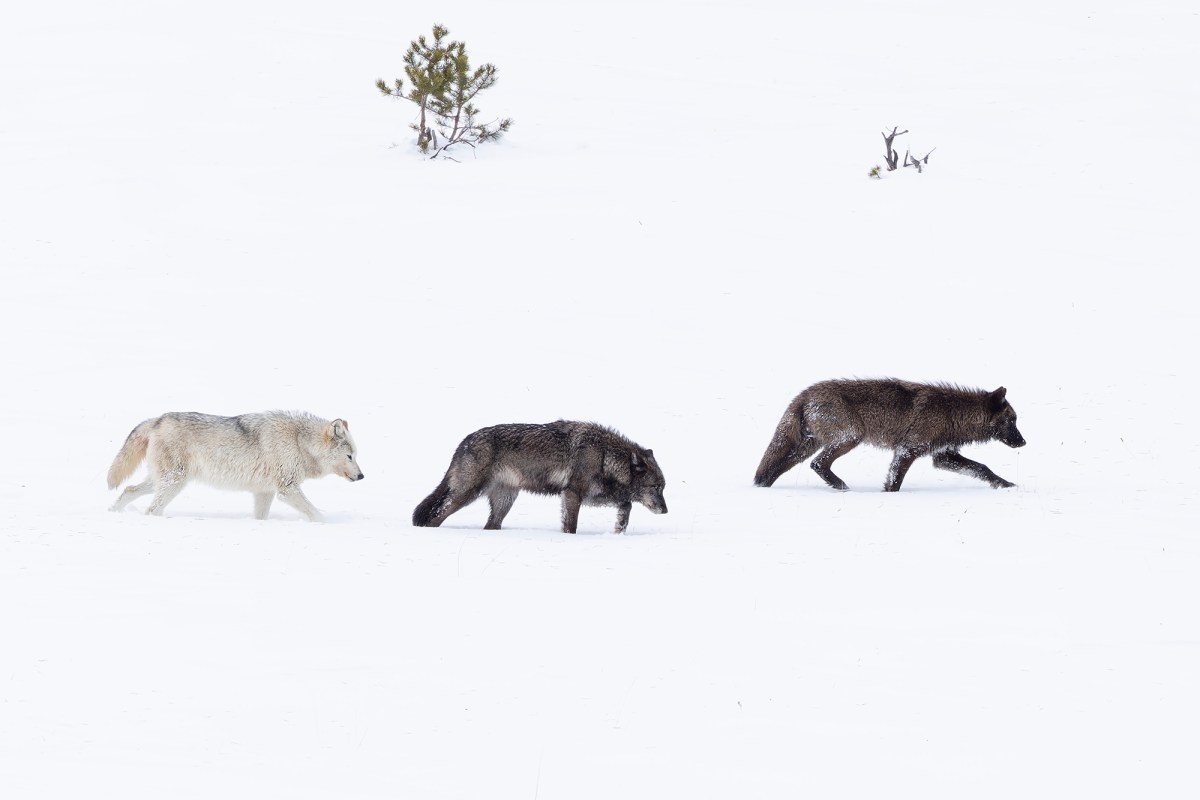
Nesvik is also reconsidering the methods, if not the results, of the Service’s landmark spring breeding survey for waterfowl. He’s interested in giving state wildlife agencies a larger share of conservation authority. And he’s eager to harness technology and novel solutions to resolve hidebound problems. He acknowledges that the intractable issues of wolf management keep him up at night.
Nesvik says that trading D.C. for time with his horses and mules in Wyoming’s backcountry is one of the highest costs of the job. He is now of leading the agency that manages 95 million acres of land and 760 million marine acres, oversees 570 refuges, defends America’s borders from invasive flora and fauna, protects and recovers the nation’s threatened and endangered species, and collects nearly $1.3 billion annually in hunting, shooting, and fishing excise taxes distributed to state and tribal agencies. But Nesvik is also comfortable talking about his sometimes uncomfortable role as an agent of change. That’s in striking contrast to most directors in Trump administration agencies, who communicate with constituents through social media or not at all, and who engage constituents in staged events amid a cadre of aides and acolytes.
This moment is important to any conversation about the role and purpose of conservation in America. As the nation cleaves along various fault lines — red vs. blue, urban vs. rural, identity politics, and economic identities — conservation has been a rare unifier. Whether you describe yourself as a preservationist or a wise-use steward, landscape and species conservation is a place where tree huggers and gun owners have historically found common ground. But the Trump administration has muddled this middle ground with its support for selling federal land in last summer’s budget reconciliation bill, its “unleashing America’s energy” agenda that would industrialize public lands, policies that support the broadest interpretation of Second Amendment rights, and its rescission of rules that have made our water, air, and soil cleaner.
Even the word “conservation” is being reconsidered right now. Republican leadership of the House Natural Resources Committee, which has oversight authority of the U.S. Fish and Wildlife Service, has taken to using the term “stewardship” instead of conservation, implying that conservation is imposed and regulatory while stewardship is voluntary and more durable.
Related: Interior Department Plans to Open All Its Public Land to Hunting and Fishing — Unless Specifically Closed by Site Managers
This is the context for our discussion with Brian Nesvik, who invited Outdoor Life into his office in the Interior department’s Washington, D.C. headquarters, and who candidly talked about this particular moment of conservation problem-solving.
Listen to this week’s episode of the Outdoor Life Podcast on Apple, Spotify, or wherever you get your podcasts.
Read the full article here