
Neurova Labs began the way many veteran-founded health technologies do, with frustration, loss and a growing belief that the systems designed to help were not addressing the full scope of the problem.
Founder and CEO Brenden Borrowman is a retired Army veteran who was medically evacuated after being wounded in Afghanistan in 2011. During his recovery and time in a Warrior Transition Battalion, he was surrounded by service members dealing with post-traumatic stress, traumatic brain injury, addiction and suicidal ideation.
After leaving the military, Borrowman lost friend after friend to suicide and became convinced that existing treatment models were missing something fundamental.
“What I saw was that these guys could function at an incredibly high level overseas,” Borrowman, who earned a PhD in Philosophy and is currently working on a PhD in Neurology, told Military Times. “But when they got home and were alone with their thoughts, everything fell apart. That told me there was a physical injury component we were not addressing.”
Borrowman spent years researching the process by which blood flow and oxygen delivery support brain function. His work led to the founding of Neurova Labs, a software company focused on treating what he describes as a physiological injury underlying conditions like PTSD and traumatic brain injury.
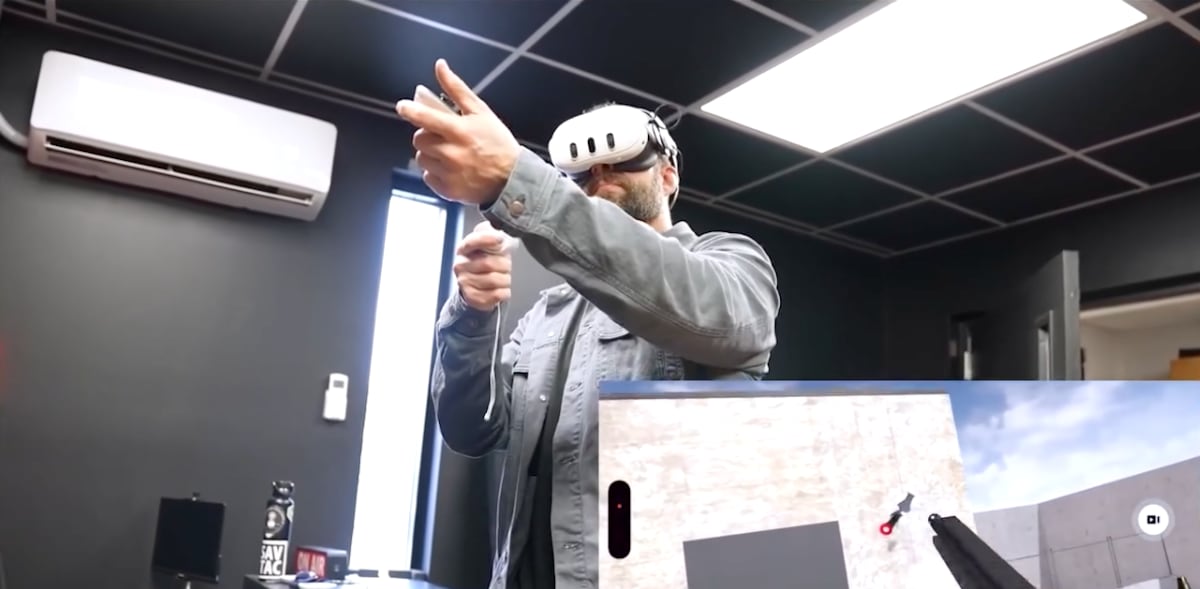
Instead of relying on traditional talk therapy or exposure-based models, Neurova Labs uses immersive virtual reality gameplay to influence how the brain regulates blood flow under stress.
The system runs on a commercially available virtual reality headset paired with Neurova’s proprietary software. Users enter a fast-paced, first-person environment designed to alternate between heightened stimulation and controlled calming states. According to Borrowman, the goal is not entertainment for its own sake, but to force the brain to rebalance how it allocates resources while the body is under pressure.
“We are not therapists,” Borrowman said. “We are not here to give closure on trauma. We are here to heal the injury so the brain can function properly again. Everything else works better when the foundation is solid.”
That foundation has resonated with veterans who have spent years cycling through medications, therapy appointments and coping strategies without lasting relief.
Ladd Sheppard, a retired Marine Corps lieutenant colonel who served more than two decades with deployments to Iraq, Afghanistan, Africa and the Middle East, first encountered Neurova Labs through professional work before becoming a user himself. Sheppard lives with PTSD and traumatic brain injury and relies on a service dog to navigate daily life.
During an early demonstration, Sheppard noticed something unusual before anyone explained the science.
“My service dog was losing her mind at first,” Sheppard said. “She was circling me, trying to interrupt, trying to calm me down. About fifteen minutes in, she laid down in the middle of a room full of strangers and fell asleep. That was my first clue that something real was happening.”
Sheppard went on to complete a four-day protocol after years of therapy, medication and adaptive strategies. The change, he said, was immediate and tangible.
“Before, when my kids pushed my buttons, my response was rage,” Sheppard said. “Four days later, I actually stopped and thought, should I yell or should I teach. That pause did not exist before. I had done years of work and never got that pause.”
He deliberately waited weeks before repeating the experience to see if the effect would fade. It did not. When stress builds now, Sheppard uses the system as needed rather than as a constant intervention.
“It reset my brain,” he said. “That is not marketing language. That is what it felt like.”
Similar experiences have emerged outside the veteran community, particularly among first responders who face repeated trauma over long careers.
Scott Stemmer, a Marine Corps veteran who served during Operation Iraqi Freedom and now works as a firefighter paramedic with Las Vegas Fire and Rescue, joined a Neurova Labs study earlier this year. Stemmer has dealt with PTSD for nearly two decades and previously sought help through the Department of Veterans Affairs, where he said treatment often meant heavy medication and little follow-up.
“I basically gave up hope that anything would actually work,” Stemmer said. “Sleep was terrible. Nightmares were constant. Irritability was through the roof.”
After four consecutive days using the VR system, Stemmer noticed changes he had not experienced since before military service.
“For the first time, when my head hit the pillow, I went to sleep,” he said. “My wife noticed before I did. No twitching. No yelling. And when I got called out at work in the middle of the night, I could come back and actually fall asleep again.”
When life interrupted his routine and he stopped using the headset for several weeks, the symptoms returned. Restarting the sessions brought relief again, reinforcing for him that the change was not a coincidence.
“This is the first PTSD related treatment I have ever done that felt tangible,” Stemmer said. “You can see it in how you feel, how you act, and even in clinical markers. That matters to people like us who have been burned before.”
Borrowman emphasizes that Neurova Labs is not positioned as a cure or replacement for therapy. Instead, he views it as a way to make other forms of care more effective by restoring basic neurological function.
“If the brain is stuck in survival mode, you cannot think your way out of it,” he said. “You would never send someone with a broken leg straight to physical therapy and expect them to run. You fix the injury first.”
The company has tested its technology with veterans, first responders, athletes, international partners and even with soldiers on the front line in Ukraine. Neurova Labs is also expanding into non-combat applications through partnerships with organizations like the YMCA and professional sports groups, including the UFC.
Privacy concerns, particularly among veterans wary of data misuse, are addressed by a deliberate design choice. According to Borrowman, the system does not collect personally identifiable information during normal use and can operate entirely offline, reducing the risk of data exposure.
For users like Sheppard and Stemmer, the appeal is not the technology itself but what it gives back.
“I can finally think,” Sheppard said. “Not just react.”
Stemmer echoed that sentiment, especially when talking about younger service members and firefighters he mentors.
“This gives people a chance to slow down before they hit the breaking point,” he said. “That matters.”
For veterans and first responders who have grown skeptical of new treatments after years of false starts, Neurova Labs does not promise miracles. What it offers, according to those who have used it, is something far rarer. A moment of quiet in a brain that has been stuck on high alert for years, and a chance to rebuild from there.
Neurova Labs is preparing for broader commercial availability while continuing research and pilot programs. More information about the company and its approach is available at https://neurovalabs.com.
Read the full article here