
NEWYou can now listen to Fox News articles!
Archaeologists excavating a Pompeii site uncovered the secret behind the longevity of ancient Roman structures: a unique concrete mixture that could chemically repair itself over time.
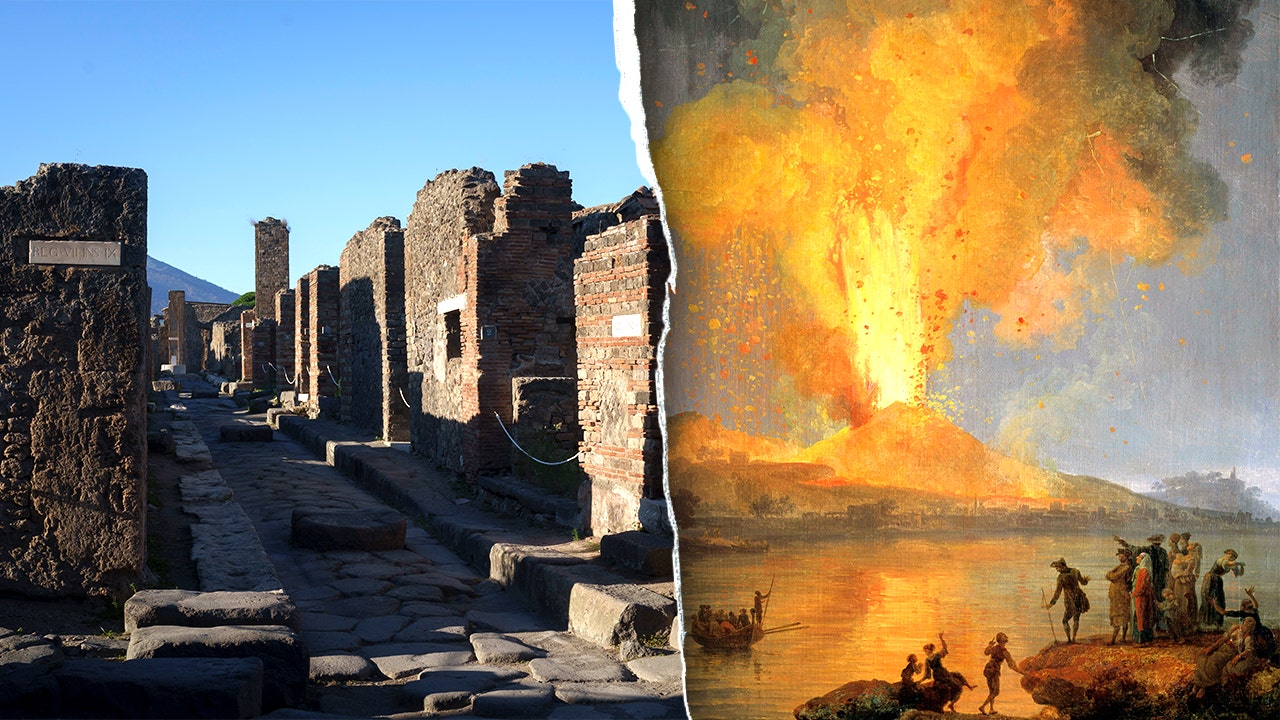
A recent study, which was published in the journal Nature Communications earlier in December, centered around a construction site that was abandoned after the eruption of Mount Vesuvius in 79 AD.
The construction site was buried under volcanic ash, which preserved it for nearly 2,000 years. Archaeologists found rooms with unfinished walls, piles of premixed dry building material and weighing and measuring tools for preparing concrete.
SCIENTISTS SHATTER TIMELINE OF HUMAN FIRE-MAKING WITH 400,000-YEAR-OLD DISCOVERY IN ENGLAND
Construction workers were building domestic rooms, a bakery with ovens, grain-washing basins and storage facilities when the volcano erupted.
At the site, researchers found that Romans used a specific method of developing durable, self-healing concrete — a substance that revolutionized architecture.
It was no secret that Romans used concrete — it was used to build the Colosseum, the Pantheon and countless other ancient buildings — but the specific method of concrete mixing had remained unknown until now.
Romans used a technique called “hot mixing” in which they added quicklime to water, volcanic rock and ash, triggering a chemical reaction that naturally heated the mixture.
The method created white chunks called lime clasts, and when water seeped in, those clasts would dissolve and reform into calcium carbonate, allowing the concrete to heal and seal the damage.

Admir Masic, a Massachusetts Institute of Technology professor who co-authored the study, told Reuters that he felt like he “traveled back in time” during the excavation.
CLICK HERE FOR MORE LIFESTYLE STORIES
Working at the site was like “standing beside the workers as they mixed and placed their concrete,” said Masic.
The site dates over a century after the Romans began industrializing concrete in the first century BC. This method differed from previous documents from the era, particularly one written by the Roman architect Vitruvius.

The study also found that the concrete technique described by Vitruvius may have been outdated by the time that Vesuvius erupted.
TEST YOURSELF WITH OUR LATEST LIFESTYLE QUIZ
“Imagine what 100 years of difference could mean for the building technology. A good analogy could be the early telephones,” Masic told Reuters. “In the 1920s-30s: rotary dialing, long-distance copper lines. In the 2020s: smartphones using packet-switched digital signals and wireless networks.”
The MIT professor also speculated that the Pompeii discovery may shed some ancient wisdom that modern builders could benefit from.
“Modern concretes generally lack intrinsic self-healing capability, which is increasingly important as we seek longer-lasting, lower-maintenance infrastructure,” he said.
“So while the ancient process itself is not a direct replacement for modern standards, the principles revealed can inform the design of next-generation durable, low-carbon concretes.”
Reuters contributed reporting.
Read the full article here