
Australian leaders have vowed sweeping changes to already strict firearm regulations after a deadly Hanukkah shooting at Sydney’s Bondi Beach left at least fifteen people dead and dozens injured. The attack, labeled an act of antisemitic terrorism, has renewed scrutiny of firearm licensing, domestic intelligence, and the safety of Jewish communities in Australia.
LISTEN TO THIS ARTICLE
SYDNEY, NSW (7-minute read) — Australia is confronting one of its darkest days in recent memory after a Hanukkah celebration at Sydney’s Bondi Beach turned into a scene of terror, leaving at least fifteen people dead and many more injured. The attack, which targeted families gathered for a Chanukah by the Sea event, has prompted immediate promises from national and state leaders to tighten already strict firearm laws and reassess how authorities monitor threats, especially those driven by antisemitism.
Summary of the incident and response
Families and children had filled the beachfront precinct for food, face painting and a petting zoo, marking the start of the Jewish festival when gunfire erupted. Police say two suspected gunmen, a father and his adult son, opened fire on the crowd before officers shot them. The fifty year old father died at the scene while his twenty four year old son remained in a coma in hospital. Prime Minister Anthony Albanese condemned the massacre as an act of antisemitic terrorism that struck at the nation’s sense of safety and community. In the aftermath, leaders promised to tighten firearm licensing, reconsider who is allowed to own firearms and expand the use of criminal intelligence in deciding who can possess them.
Tough gun laws questioned after Bondi Beach mass shooting
Australia is often cited as a model for strict firearm regulation, thanks to the landmark national firearms agreement passed after the 1996 Port Arthur massacre in Tasmania, where thirty five people were killed. That agreement sharply restricted access to rapid fire rifles and led to large scale buybacks, and many experts credit it with dramatically reducing the number and deadliness of mass shootings since.
Yet this attack revealed painful gaps. Authorities confirmed that the older suspect had legally held a firearm license for about a decade and had accumulated six firearms under that license. In response, Albanese and state leaders proposed new limits on how many firearms an individual may own and more frequent reviews of licenses over time. There is also a push to restrict firearm ownership to Australian citizens only, a change that would have disqualified the older suspect, who was a long term permanent resident rather than a citizen.
Officials also want to bring more criminal intelligence into licensing decisions, meaning that if someone has close associates with extremist links, it could count against their ability to legally own a firearm even if they themselves do not have a serious conviction.
Understanding where you can legally carry a firearm is essential for every responsible gun owner, especially when traveling. Our concealed carry reciprocity map gives you an instant, easy-to-read view of…

Understanding duty to inform laws is crucial for anyone who carries a concealed firearm, whether you carry with a permit or under permitless (constitutional) carry. These laws dictate when, how,…
When it comes to self-defense, where you’re standing matters. Some states give armed citizens clear Stand Your Ground protections , while others still follow traditional duty-to-retreat rules in public. On…
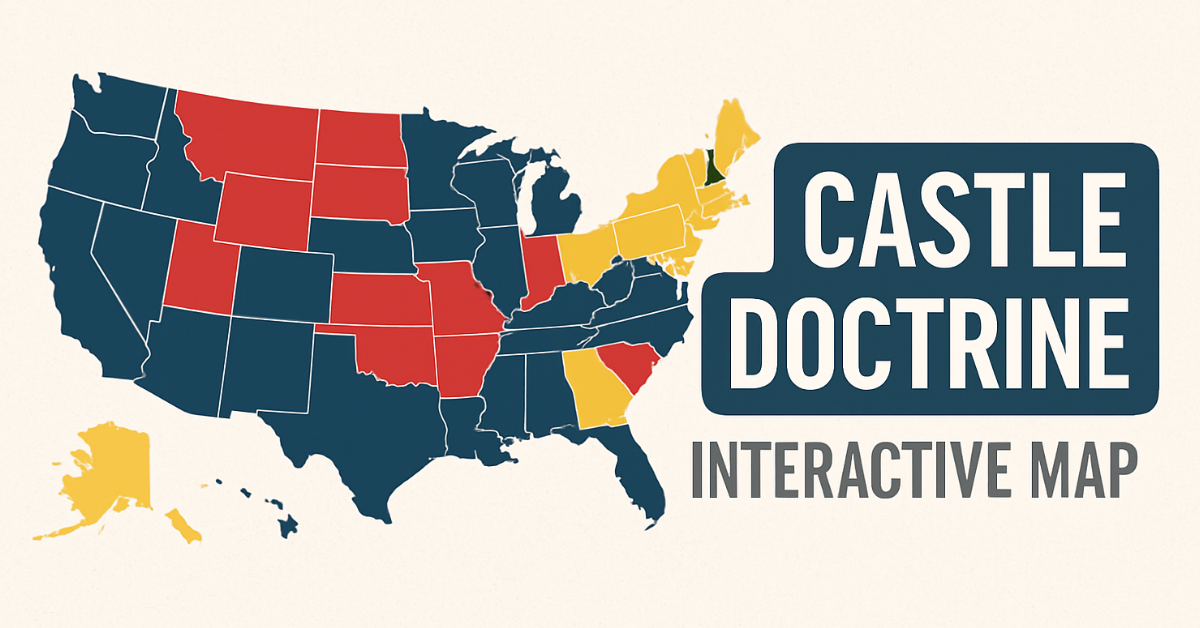
Understanding Castle Doctrine laws and the various castle doctrine states is essential for gun owners who want to know their legal rights when defending themselves at home, in an occupied…
Antisemitic terror and a history of surveillance
The attack has deepened concerns about rising antisemitic incidents in Australia. Albanese confirmed that the younger suspect had been examined by the Australian Security Intelligence Organization for six months in 2019 because of his association with individuals linked to a Sydney based Islamic State group cell. At the time, the agency concluded he did not present an active threat, and he did not hold a firearm license. The investigation focused more on others in his circle than on him personally.
This history has now raised difficult questions about how agencies assess evolving risks, especially when ideology and online radicalization can intensify quickly. Jewish communities, already anxious about global tensions and rising antisemitic incidents, are demanding stronger protection for religious events and places of worship.
Heroism in the chaos
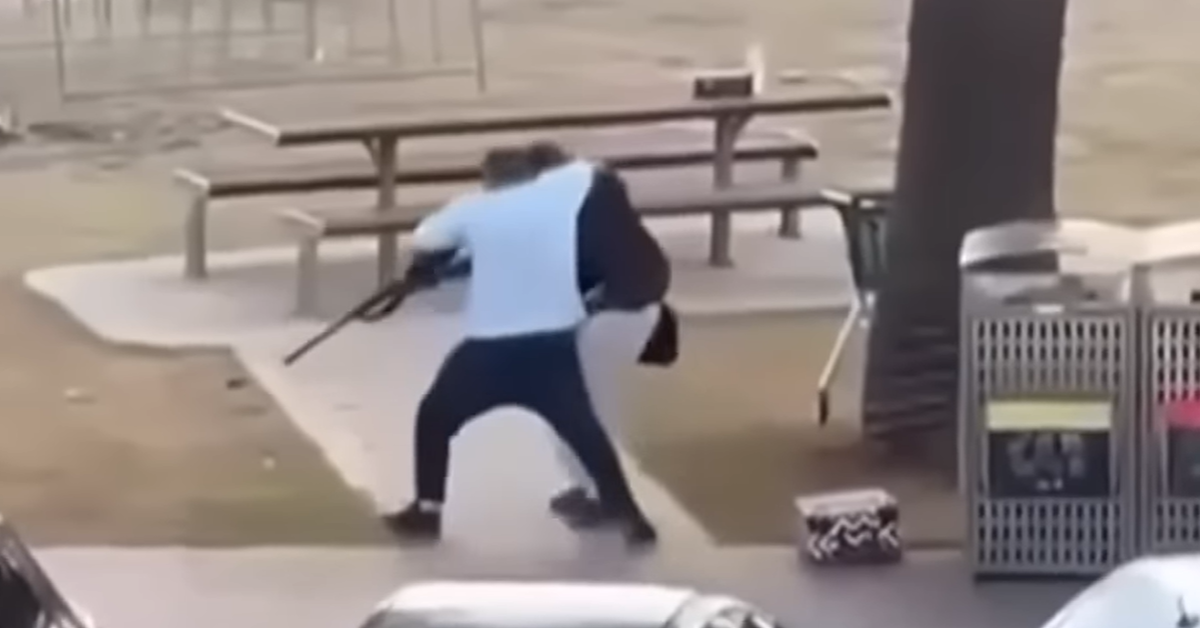
Amid the horror, eyewitnesses captured a moment of extraordinary courage. Video from the scene shows a man later identified as forty two year old Ahmed al Ahmed tackling and disarming one of the attackers. He wrestled the firearm away, briefly pointed it back in the assailant’s direction, then placed it safely on the ground, a critical action that likely prevented further bloodshed.
Al Ahmed, a fruit shop owner, father of two and Australian citizen originally from Syria, was shot in the shoulder during the incident and underwent surgery. His parents, who recently joined him in Australia, described him as someone who had previously served in Syrian security forces and who has always run toward danger to protect others. His actions reflect something every responsible firearm owner and self defender understands: in a crisis, clear thinking, controlled aggression and respect for the power of a firearm can make the difference between life and death.
Victims and community grief
Hospitals across Sydney are treating at least thirty eight people, including two police officers. The dead range in age from ten to 87 years. Among them, according to community sources, are a ten year old girl, a rabbi and a Holocaust survivor.
Jewish organizations reported that Rabbi Eli Schlanger, assistant rabbi at Chabad of Bondi and one of the main organizers of the family Hanukkah event, was among those killed. Israel’s Foreign Ministry confirmed the death of an Israeli citizen, and French officials said a French national, identified as Dan Elkayam, was also among the victims. Outside St Vincent’s Hospital, Larisa Kleytman said her husband Alexander, a fellow Holocaust survivor, did not survive the attack. The tragedy has touched families across continents and generations.
Firearms, self defense and staying safe in public spaces
For people who carry a concealed firearm in countries or regions where it is legal, this attack is a sobering reminder that even in places with strict regulation, determined attackers can still find ways to cause harm. Responsible carriers and anyone thinking about self defense should keep several lessons in mind:
- Crowded events near popular landmarks and religious gatherings can be attractive targets, so maintaining relaxed but constant awareness matters.
- Knowing your surroundings, exits and potential cover can help you react faster if something feels wrong.
- Regular training in safe firearm handling, decision making under stress and out of holster skills is essential. Simply owning a firearm is not enough.
- Understanding the local laws where you live or travel is critical, since rules around carrying or using a firearm differ dramatically from country to country.
Equally important, not everyone should rush toward danger. What Ahmed al Ahmed did was brave, but it carried enormous risk. For many people, the safest and most responsible response is to move away from the threat, help others escape and provide first aid once the immediate danger has passed.
As Australia debates new restrictions, the balance between individual rights, community safety and proactive threat detection will remain at the center of public conversation. For Jewish communities and all those who gathered to celebrate Hanukkah at the sea, the hope is that their grief will drive meaningful change rather than fade with the news cycle.
Safety Tip: Whether you own a firearm or not, make a habit of identifying exits, potential cover and safe rally points every time you enter a public space, and talk with your family in advance about how you will find each other and communicate if a crisis unfolds.
Read the full article here