
Most people think “fuel freezing” is an extreme problem reserved for Antarctica explorers or reality TV truckers crossing frozen lakes. They shrug at winter weather, fill their tank halfway, then act shocked when the engine sputters, the heater dies, and the vehicle freezes along with them. Meanwhile the news insists everyone should “stay home for safety,” which is another way of saying be helpless and wait for someone else to save you.
Freezing fuel isn’t a weird science problem. It’s a predictable threat, and it hits hardest when things are already going wrong: blackouts, blizzards, grid strain, blocked roads. If your vehicle won’t start, your generator won’t fire, or your stored fuel becomes useless, then your “emergency plan” is nothing but a sketch of what could’ve saved you.
This isn’t about temperature charts. It’s about survival.
Gasoline: It Rarely Freezes, But the Real Danger Isn’t Gas
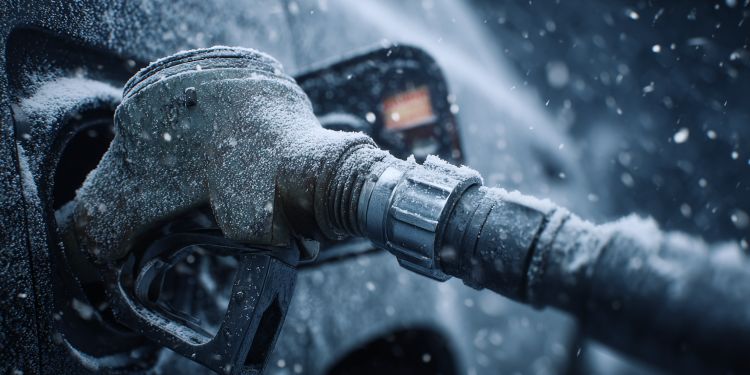
Gasoline doesn’t freeze the way water does. It can remain liquid in devastating cold most of us will never see. That’s the bait. People see gas staying fluid and assume they don’t have to worry about winter fuel problems. They’re technically right and completely wrong at the same time.
Gasoline doesn’t freeze…
but the water inside it does.
Related: The Best Places Where You Can Store Fuels Safely In An Emergency
There’s always moisture in a gas tank. Warm air enters the tank. The outside temperature drops. Moisture condenses on the tank walls and drips into the fuel. By the time winter hits, you’re driving with hidden ice waiting to form. Not all at once — it starts as slush, crystals, or thin films.
And that thin film can:
- choke fuel lines
- block filters
- jam pumps
- crack components through expansion
It’s sabotage from inside your own tank.
Gas doesn’t freeze.
Water pretends to be part of your fuel until it ruins your engine.
Smart preppers don’t “hope” their gasoline works in winter. They dry it, treat it, and block moisture from forming. A treated fuel system is a weapon. An untreated one is a ticking time bomb.
Diesel: It Doesn’t Freeze, It Thickens and Betrays You
Diesel doesn’t need to freeze solid to kill your vehicle. It just needs to gel. That happens when naturally occurring waxes in diesel thicken as temperatures fall. Diesel becomes cloudy, sluggish, and finally so thick it can’t pass through filters or injectors.
At first you notice nothing. Then the engine coughs. Then it starves.
Then you sit in a dead vehicle with a full tank and no heat.
Related: How to Drain a Fuel Tank: A Step-by-Step Guide for Preppers
Gelling can strike around 15 degrees Fahrenheit, sometimes sooner depending on fuel quality and location. Imagine being trapped on a highway, no engine heat, snow piling up, phones dying, and the only thing that failed was fuel you trusted.
People don’t get stranded because of lack of gas or diesel.
They get stranded because they trusted unprepared fuel.
Winter diesel exists for a reason. Anti-gels exist for a reason. Most people ignore them. Those people turn into roadside ornaments every winter storm.
Cold Weather Turns Your Vehicle Into a Shelter
Your vehicle isn’t just transportation during a winter emergency. It becomes:
- your heated refuge
- your resupply platform
- your mobile escape route
- your backup shelter if the grid fails
If it doesn’t start, if the heater doesn’t work, if your fuel betrays you, then your escape plan freezes to death before you do.
Preppers don’t wait.
Preppers don’t beg for assistance.
Preppers insulate their mobility before it’s taken from them.
The Prepper’s Fuel Protocol: Stay Mobile, Stay Alive
✔️ Keep Tanks At Least Half Full
Air space breeds condensation. Condensation freezes. A full tank isn’t luxury — it’s self-defense.
✔️ Use Anti-Gel Additives for Diesel
If you wait until the cold hits, you’re already losing the battle. Diesel must be prepared before the temperature drops with quality anti-gel additives.
✔️ Use Fuel De-Icers for Gasoline
You’re not fighting frozen gas. You’re fighting hidden ice. Fuel de-icers help.
✔️ Store Additives Inside the Vehicle
Home storage is useless if the vehicle won’t start. Additives go inside the trunk, not on the shelf.
✔️ Assume Weather Will Drop Without Warning
Storms don’t care about forecasts and the grid doesn’t care about your comfort.
✔️ Carry Backup Heat
Your vehicle may become a frozen coffin without thermal layers, blankets, and hand warmers.
Gear & Additive Recommendations for Real Preppers
🔧 For Diesel Owners
Look for:
- Anti-gel additives labeled for winter or extreme cold
- Diesel treatments with wax dispersants
- Additives that include cetane improvers for better cold ignition
Avoid:
- “universal” additives that don’t specify cold weather
- products that claim to fix fuel after it has gelled (it’s too late)
🔥 For Gasoline Owners
Look for:
- Fuel line de-icers (often labeled for ethanol systems)
- Water removers designed for long-term storage
- Moisture control products rated for sub-zero temps
Avoid:
- storage stabilizers that don’t mention moisture
- cheap alcohol-only products that evaporate quickly
🛢️ For Stored Fuel
- Use airtight, temperature-stable containers
- Rotate fuel before seasonal changes
- Treat fuel before storing it, not after
Treating fuel isn’t about preserving machinery.
It’s about preserving your freedom to move when others freeze in place.
If You Want Real Winter Self-Sufficiency, Stop Trusting the Grid
Fuel isn’t just mobility. It’s independence. But what happens when the grid collapses, roads disappear under ice, and every store, gas pump, and furnace switches off? Most people wait for a rescue that never comes. Real preppers become their own rescue.
That’s why I’m recommending No-Grid Survival Projects.
This isn’t a “fun hobby book.” It’s a blueprint for living when the system fails you. It shows you how to generate heat, power, food, and real resilience using tools you already own or can scrounge anywhere. Step-by-step builds. Off-grid tricks the government doesn’t hand out. Durable solutions that don’t need electricity, fuel, or permission.
You’ll learn how to:
- heat a room without the grid
- build off-grid cooking systems that don’t need fuel
- secure food without refrigeration
- build charging systems without outlets
- survive when everything you depend on is gone
These are not gimmicks. These are survival machines you control without the government, without the grid, without a working fuel pump or a warm engine.
When others freeze, you adapt.
When systems fail, you keep going.
And when fuel becomes useless, you’ll already have power.
If you’re serious about self-reliance and staying alive when the modern world collapses under the weight of winter, blackout, or chaos, No-Grid Survival Projects turns you from a driver into a survivor.
You may also like:
 How To Make Biodiesel Fuel: Beat the System, Power Yourself
How to Have 24/7 Free Electricity (VIDEO)
Fuel Stabilizer: Keep Your Gas Alive
How to Drain a Fuel Tank: A Step-by-Step Guide for Preppers
Read This Before Stockpiling Your Fuel!
Read the full article here