
America has long had an intellectual love affair with fugitives and outlaws who lived by their own terms and survived off the land. Some of the most notorious, like Butch Cassidy, Billy the Kid, and even Ted Kaczynski, used their environment to evade capture for an impressive length of time.
Being a history buff, I thought I’d take a closer look at how some of our most notorious fugitives lived off the land. Not as a handbook for getting away with it, but as a look through the lens of important survival skills you might need in a SHTF situation where you need to go undetected.
Butch Cassidy and the Sundance Kid, the Masters of Survival
 Butch Cassidy and the Sundance Kid inarguably top the list of America’s most notorious fugitives. Even before their outlaw careers began, they relied on the same skills that many survivalists talk about today.
The two men knew how to travel light, adapted to shifting terrain, and used every scrap of local knowledge they could gather.
Their escape across the desert plains was, besides outrunning the law, a study in self-reliance and resourcefulness in one of America’s most barren landscapes.
It was their ability to adapt, while their pursuers struggled to trace them, that let them get the massive head start they needed. They had more than just epic grit. They understood how to move unseen and could live off sparse resources for extended stretches.
One of their biggest advantages was cached supplies, hidden in the seemingly barren landscape. They also had a knack for finding water in places most men would’ve ridden past, and crudely purifying water most men wouldn’t dare to drink.
👉 How to Hide Your Stockpile in Plain Sight
Butch Cassidy and the Sundance Kid also knew how to make the most of their social value. They tapped into friendly ranchers or sympathetic townspeople to restock and get word of the law’s movements.
They also knew when it was time to leave the familiar behind. Pinkertons, railroad lawmen for hire and dwindling loyalties told them the law would eventually close in.
So, they slipped free of the noose and set sail to Argentina, where they hoped to reinvent their lives on the South American continent. While they were eventually caught, it was this willingness to let go of their comfort zone and embrace a growth mindset that perfectly embodied their ability to survive off whatever the land gave them.
Jesse James: Survival Through Territory and Trust
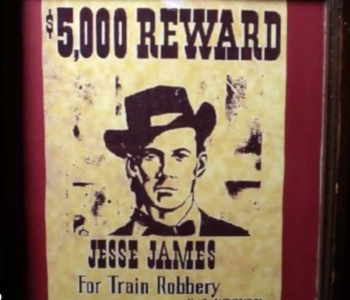 Jesse James carved out an existence in the post-Civil War Midwest in ways that blurred the line between outlaw and folk hero.
His prolonged survival is owed less to wilderness isolation and more to community camouflage. He chose to live in regions that were sympathetic to Confederate guerrillas.
These social connections gave him access to shelter in barns, attics, and smokehouses. Locals fed him, hid his horses, and passed on information about approaching lawmen.
When travel through towns became risky, he shifted to backcountry routes, following creeks and forest corridors across Missouri and Kentucky. He and his gang understood the rhythm of rural life, the sound of a blacksmith’s hammer, the distance between farms, and when neighbors might be away for Sunday services.
James’s approach shows that “living off the land” wasn’t always about foraging in isolation. It meant tapping into a social network when he needed it, while also knowing how to avoid being seen when he needed to keep a low profile.
Even as a fugitive who eventually became a folk hero, Jesse James couldn’t have survived without a few forgotten survival skills. If we take a closer look, we’ll see that many of his strategies for thriving in the Wild West closely resemble those of the Amish.
Just think about it – how have they managed to sustain themselves for hundreds of years without modern conveniences, yet continue to flourish in today’s tech-driven world?
THIS BOOK reveals the answers and serves as an unparalleled source of inspiration for anyone pursuing an off-grid lifestyle.

This story is a reminder that survival communities aren’t built overnight. Trust, trade, and mutual protection can be stronger defenses than walls. Having deep, strong social connections also gives you something to fall back on when you’re desperate.
Billy the Kid and Off-grid Living
This notorious fugitive survived off the land through a mix of frontier know-how, improvisation, and a network of sympathizers scattered across New Mexico Territory. Life on the run during the Lincoln County War meant moving constantly through canyons, mesas, and high desert plains where food and shelter were scarce.
He relied on wild game, like jackrabbit, quail, and mule deer. Then cooked over small fires that were carefully disguised to avoid detection. Often in small canyons, gullies, and crags that further hid the light and smoke.
They sourced most of their water from cattle troughs, shallow creeks, and the occasional hidden spring known only to local ranch hands. When ammunition or horses ran low, they bartered, stole, or leaned on loyal ranchers who quietly supplied them with what they needed in exchange for protection.
But the lesson is that The Regulators’ survival wasn’t just about endurance. It was also about blending into the terrain and using their reputation to their advantage. Billy had a knack for reading the landscape and people alike, choosing hideouts that offered clear lines of sight and quick escape routes.
Ted Kaczynski: A Hermit’s Survival Strategy
The Unabomber, Ted Kaczynski, lived alone for nearly two decades in a 10-by-12-foot cabin without running water or electricity. His survival methods were severe and deliberate. He grew vegetables, hunted rabbits, stored firewood, and kept meticulous records of weather patterns.
He knew how to get what he needed from the land, and when it would be most available. Kaczynski understood the little details like fuel consumption, crop rotation, and how to maintain warmth in sub-zero winters. With very little needing to be sourced from the outside world.
His failure came not from hunger or exposure, but from the special hubris that deep isolation breeds. Living off the land can harden the body but distort the mind if there’s no balance between survival and sanity.
Kaczynski was an outcast and is widely regarded as a domestic terrorist. His actions were criminal and in no way should he be seen as a role model. Yet, even so, we cannot ignore that he demonstrated an extraordinary ability to live off the grid and evade capture for years.
His meticulous planning, self-sufficiency, and attention to detail in sustaining a hidden lifestyle provide insights into the practical skills and strategies someone might use to survive in isolation, lessons that are purely about survival, not morality.
This is why learning from the stories of others, whether outcasts or heroes, matters. True resilience and self-reliance come from experience, and only those who have lived it can show what it really takes. If you’re wondering how to survive in the wild long-term, here’s a guide that will walk you through all the essential steps:
Bonnie and Clyde: Motion as a Means of Survival
The advent of the automobile made it possible for fugitives like Bonnie Parker and Clyde Barrow to use speed as an asset. Yet constantly being in motion required its own kind of survival mindset.
They couldn’t rely on stores or motels, so they scavenged, stole, and improvised. Their car served as both shelter and transport, and their weapons were tools for hunting as much as for personal defense. Bonnie and Clyde camped in creek beds and abandoned farmhouses, using stolen blankets and canned food to stretch their limited resources.
This survival strategy meant that gasoline was more valuable than gold. Especially since every refill carried the risk of being recognized. If they were spotted, a single phone call could bring an entire dragnet of lawmen down on them.
Their story made front-page news during the Great Depression, a time when scarcity and survival defined daily life. Bonnie and Clyde were a product of their era, forced to adapt, improvise, and endure. While we don’t glorify their crimes, their experience teaches timeless lessons about resilience, resourcefulness, and the survival mindset.
You can read about these survival lessons and more in our newest guide Dollar Apocalypse. This book dives into the realities of living off the grid, thriving in scarcity, and mastering the mindset of true self-reliance.

Contrary to popular belief, Bonnie and Clyde’s style of survival was about staying one meal ahead of hunger and one county ahead of pursuit. What led to their downfall was not hunger or exhaustion, but predictability.
Once their routines, habits, and likely hideouts became predictable to law enforcement, they were easy to track and ambush. This underscores a key survival principle: in high-stakes situations, being unpredictable and adaptable can be just as important as having resources.
Final Thoughts on Fugitive Survival Techniques
These are just a few of the more famous American fugitives who learned how to survive off what the land and the people offered. While each had their own degree of grit and determination, they demonstrated different approaches one can take when you need to go undetected. All of which are strategies a modern-day prepper might use to conceal their shelter or evade protection when forced to flee.
You may also like:
 What Plants Cowboys Ate in the West
Do THIS as Soon as Possible to Protect Your Stockpile (VIDEO)
Survival Hacks From The Civil War That Are More Useful Than Ever
How The Worst Famine In The US History Killed 3 Out Of 4 People
I Ate Like People Did During the Great Depression. Here’s What I Learned
Read the full article here